If you're thinking about selling, or just weighing whether a new roof is "worth it," you've probably run into conflicting advice. Some people say a roof pays for itself. Others say you'll never get your money back. The truth is more useful than either, and it comes down to understanding how a roof adds value rather than assuming it's a simple dollar-for-dollar boost.
Here's the short version: a new roof rarely adds a premium on top of your home's price the way a kitchen remodel might. What it does is protect the price you can ask, widen the pool of buyers willing to make an offer, and keep a deal from falling apart during inspection. In a real sale, that's often worth more than the percentage figures suggest.
The real ROI of a new roof
National remodeling cost-versus-value data consistently ranks asphalt shingle roof replacement among the better-returning exterior projects, typically recovering somewhere in the range of 60 to 70 percent of its cost at resale. On paper, that looks like you're "losing" 30 to 40 percent.
But that figure misses the point for most sellers. It treats the roof like an optional upgrade competing against the cost of doing nothing. In reality, a failing roof isn't a neutral starting point, it's a liability that actively drags down your sale. When you compare a new roof against the actual cost of selling with a bad one (price reductions, repair credits, lost buyers, longer days on market), the practical return is usually much better than 60 to 70 percent.
A new roof isn't usually a value add. It's a value protect. It defends your asking price and keeps the sale on track, which in a real transaction is often worth more than a headline ROI percentage.
How a roof actually adds value
Buyers don't pay a premium for a roof the way they pay for a renovated kitchen or a finished basement. A sound roof is something they expect, like working plumbing. You don't get bonus points for it; you lose points without it.
So the value shows up in three indirect but very real ways:
- It removes an objection. A buyer who sees a new roof crosses "major expense in the next few years" off their worry list. That makes your home an easier yes.
- It widens your buyer pool. Buyers using certain loan types, and buyers who simply don't want a project, will skip a home with a visibly aged roof. A new roof keeps them in play.
- It protects your price. An old roof gives buyers a concrete reason to negotiate down. A new one takes that lever away.
What buyers and appraisers see
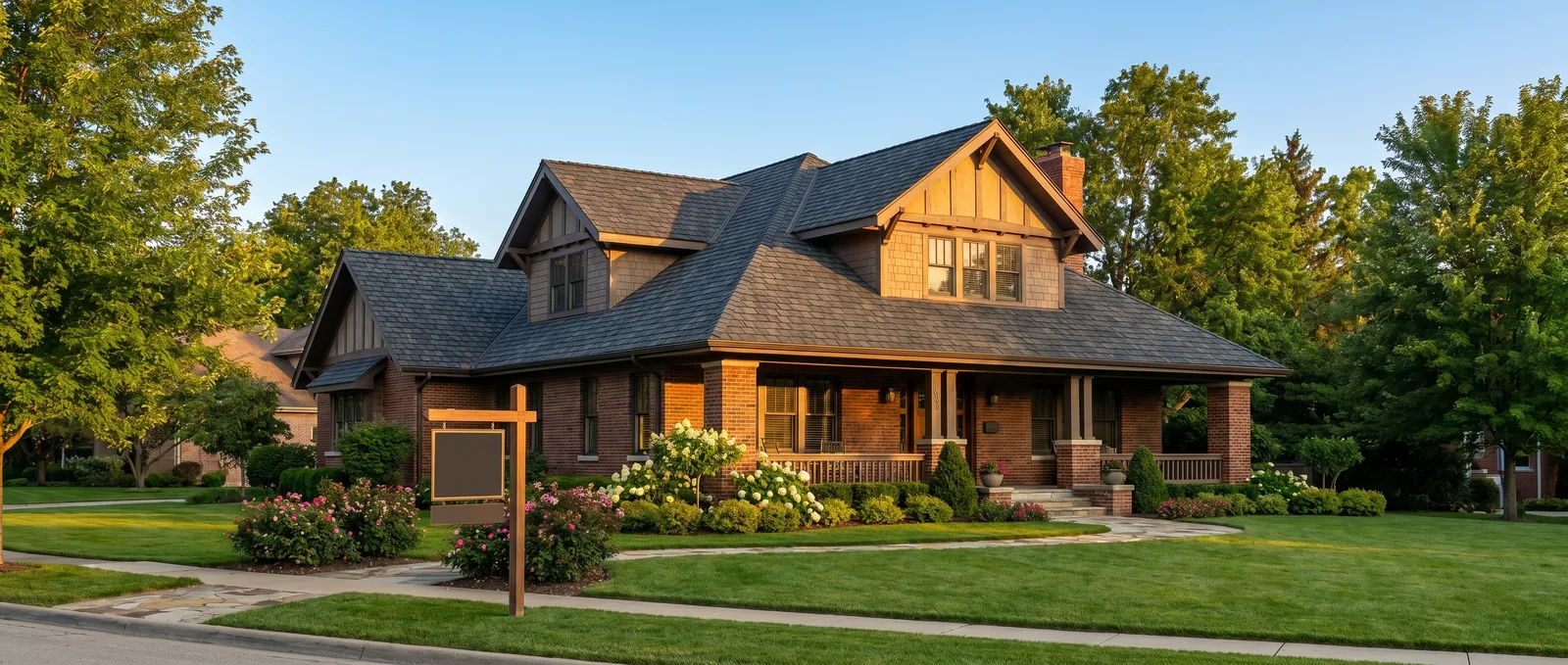
When a buyer pulls up to your home, the roof is one of the largest visible surfaces and one of the first things their eye lands on. A fresh, clean roof reads as "this home has been cared for." A streaked, curling, patchy roof reads as "what else has been neglected?" That impression colors how they see the entire property.
Appraisers are more clinical, but the roof still matters. A roof near the end of its life can affect an appraiser's condition rating and, in some cases, the value they assign. More importantly, lenders and insurers pay attention to roof age. Some insurers won't write a new policy on a roof past a certain age, or will only offer limited coverage, which can complicate your buyer's ability to close. Roof age and lifespan directly feed into all of this.
The inspection problem with an old roof
This is where an aging roof does the most damage to a sale, and it's the part sellers underestimate most.
Almost every buyer orders a home inspection, and the roof is one of the most commonly flagged items. When an inspector notes a roof at or near the end of its life, the buyer now has leverage. The typical outcomes:
- They ask you to replace the roof before closing.
- They ask for a price reduction or a credit to cover replacement.
- They get nervous about what else might be wrong and walk away entirely.
Any of these can cost you more than the roof would have. A renegotiation after the inspection almost always favors the buyer, because at that point you're emotionally committed to the sale and under time pressure. Replacing the roof on your own terms, before listing, takes that whole scenario off the table. If you're unsure whether your roof would raise flags, our guide on signs you need a new roof is a good starting point.
Should you replace before listing?
Not every seller needs a new roof, and we'll tell you that honestly. The decision comes down to the roof's actual condition:
| Your roof's condition | Recommendation |
|---|---|
| Aged, leaking, or near end of life | Replace before listing. It widens your buyer pool and prevents an inspection renegotiation. |
| Middle-aged with visible wear or streaking | Get an inspection. A cleaning or minor repair may be enough, or a replacement may pay off depending on your market. |
| Newer, sound, years of life left | Leave it. Document its age and condition and use it as a selling point instead. |
If your roof is genuinely in good shape, a replacement is wasted money. The smart first step is always an honest assessment, not an automatic replacement. A free inspection tells you exactly which row you're in.
If you do replace before selling, doing it a few weeks ahead of listing gives you clean photos, a fresh warranty to advertise, and time to handle any decking surprises without rushing. A roof replaced under deadline pressure rarely goes as smoothly.
Curb appeal and first impressions
Most buyers start their search online, and the first photo they see is almost always the front of the house, roof included. A new architectural shingle roof photographs cleanly and signals a well-maintained home before a buyer reads a single word of the listing. That first impression determines whether they click, schedule a showing, or scroll past.
Choosing a shingle color that complements your home's exterior matters here too. A modern dimensional shingle in a color that suits your brick or siding does more for curb appeal than most sellers expect, and it costs nothing extra to choose well during a replacement you were doing anyway.
The bottom line
A new roof won't usually add a dollar-for-dollar premium to your home's price, but that's the wrong way to measure it. It protects your asking price, keeps buyers and their lenders comfortable, prevents a costly inspection renegotiation, and makes a strong first impression in photos and in person. For a home with an aging roof, those benefits routinely add up to more than the project costs.
If you're deciding whether to replace before selling, the best move is to find out exactly what condition your roof is in. We're happy to take a look and give you a straight answer, whether that's "replace it" or "you're fine, list as-is."