
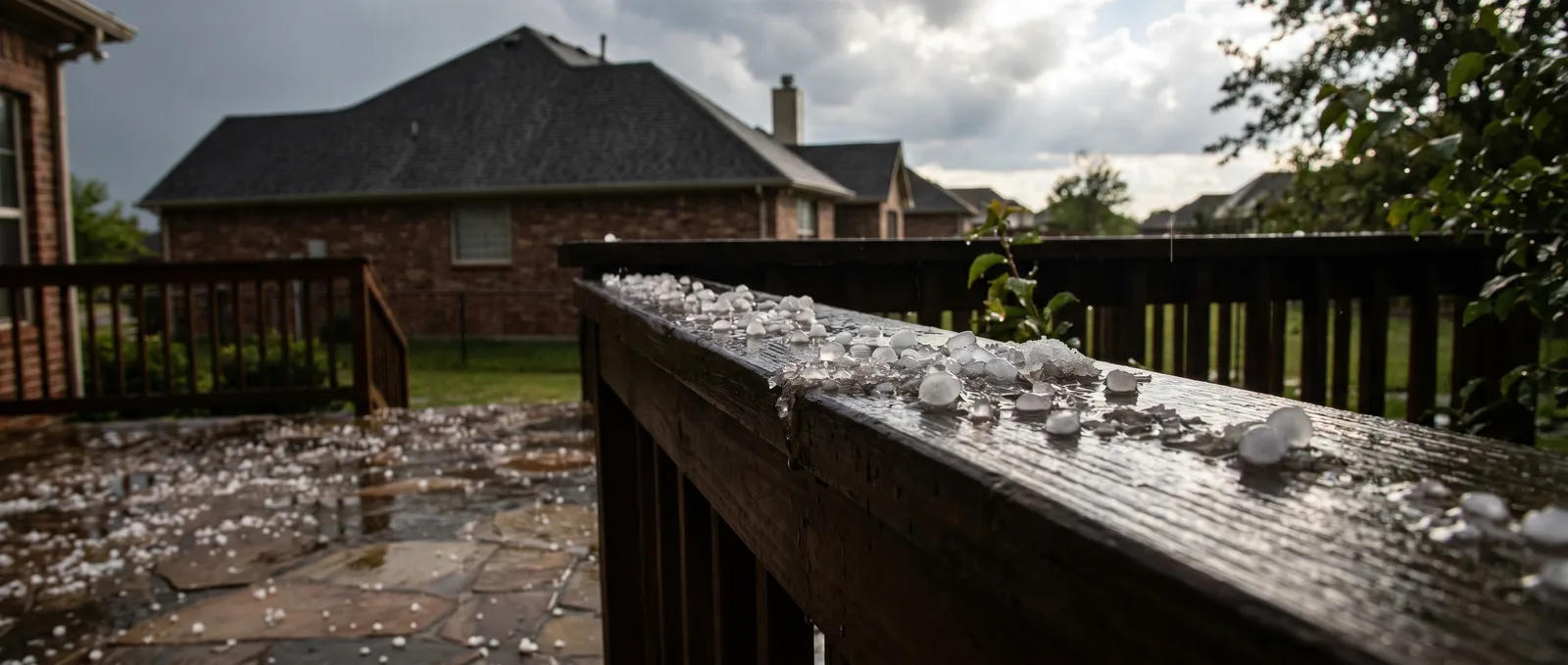
A hail storm just rolled through your neighborhood. Maybe it was the kind that woke the whole family up, quarter-sized hailstones drumming on the windows for ten minutes. Maybe it was milder and you didn't think much of it until you noticed dents on your AC unit the next morning. Either way, the next 7-14 days matter for protecting your home and your insurance claim.
This is the checklist we walk North Georgia homeowners through after every major event. It's based on hundreds of post-storm inspections across Forsyth, Hall, Gwinnett, Jackson, Barrow, and Fulton counties.
Step 1: Make sure everyone is safe
Before anything else: people, then pets. After a severe storm, check that everyone in the home is okay, that there's no broken glass from impact, and that your home is safe to occupy. If part of your roof failed catastrophically (rare but possible with very large hail or tornadic activity), don't enter the affected area.
If you have an active leak through the ceiling, place buckets, move furniture and electronics out of the way, and call a roofer for emergency tarping. Don't climb on the roof yourself. Wet shingles are slippery, and the structural damage may be more extensive than you can see.
Step 2: Walk your property and document everything
Within the first 24-48 hours after a storm, walk around the outside of your home with your phone and take photos of:
- Your AC condenser unit (look for dents in the aluminum fins)
- Wood fences and fence posts (splatter marks, dents)
- Vehicles parked outside (hood and trunk dents)
- Wood deck surfaces (white splatter marks)
- Window screens (tears or holes)
- Vinyl siding (cracks, especially on older siding)
- Gutters and downspouts (dents, paint chips)
- Roof vents visible from the ground (dents, displacement)
- Mailbox, lawn furniture, and any glass surfaces
These photos serve two purposes: they document hail damage on softer materials (which proves your roof was struck), and they capture evidence before weathering and weather wash off the granule splatter and other transient signs.
Step 3: Look in your gutters
Check your gutters and downspout exit points for granule accumulation. Some granules in gutters are normal. They shed throughout a shingle's life. A heavy concentration of granules at downspout exits, especially within hours or days of a hail event, indicates significant granule loss from impact.
Photograph this too. Granules wash away with the next rain, so timing matters.
Step 4: Note the storm date and confirm it
Write down (and photograph the time/date stamp on) the day the storm hit your home. Then verify it against the National Weather Service storm event database at weather.gov/ffc/past_events. NWS records the size of hail and damaging winds reported in your area.
Insurance carriers will ask for the storm date. Having an NWS-verified record of the event in your area significantly strengthens your claim.
Step 5: Schedule a free roof inspection
Within the first week after the storm, schedule a free roof inspection from a qualified contractor. Don't sign anything: a roof inspection is just an inspection. You're gathering information.
What to expect from a real inspection:
- The roofer walks (or drones) the roof for 30-45 minutes
- They photograph any damage, slope by slope
- They identify damage to non-roof components (gutters, vents, flashings)
- They give you a written assessment with photos
- They explain whether the damage warrants a claim, and if not, why
Be cautious of contractors who:
- Charge for the initial inspection (legitimate ones don't)
- Knock on your door uninvited shortly after a storm ("storm chasers")
- Ask you to sign a contract or assignment of benefits before the inspection
- Promise to "waive your deductible" (this is illegal in Georgia)
Step 6: File your insurance claim
Once you have your inspection report in hand, call your insurance carrier and file the claim. You can usually do this online or by phone. Provide:
- The storm date
- The list of damaged items (roof, gutters, AC, etc.)
- Your photo documentation
- The contractor's inspection report
The carrier will assign an adjuster and schedule a property inspection, usually within 7-10 business days.
Step 7: Be present at the adjuster inspection
This is the most important meeting in the entire process. The adjuster decides what gets covered and at what scope. You should be there, and so should your roofer.
Insist on having your roofing contractor at the adjuster's inspection. We climb the roof together, walk through the damage, and discuss scope on the spot. Adjusters are professional but they're often inspecting 5-10 roofs a day. They can miss things. Having a roofer present significantly improves the outcome.
At Bishop JD Roofing, we attend every adjuster inspection for our customers as part of our standard claim assistance process. There's no extra charge for this.
Step 8: Move forward with the work
If the claim is approved:
- You'll receive an initial check for the ACV (actual cash value) of the work
- You sign a contract with your roofer
- The work is performed (typically 1-2 days for a residential replacement)
- The roofer submits final paperwork to the carrier
- The carrier releases the depreciation amount as the second installment
- You pay only your deductible out of pocket
If the claim is denied or scoped too low, your roofer can submit a supplement request with additional documentation. Many denials are reversed at this stage.
Common mistakes to avoid
- Waiting too long. Georgia carriers have a one-year filing window. Damage is hardest to document months later when granules have washed off and storm reports are old.
- Climbing the roof yourself. Falls from roofs are a leading cause of homeowner injury. Hire a professional or use a drone-equipped inspector.
- Hiring storm-chasers. Out-of-state contractors who descend on a city after a storm often disappear before warranty work is needed. Use a local contractor with a permanent address.
- Signing an assignment of benefits without understanding what it means. AOB transfers your claim rights to the contractor, only sign one if you trust the contractor and understand the implications.
- Skipping the claim because "the roof looks fine." Most hail damage is invisible from the ground. Have it inspected before deciding.
Why work with us
Bishop JD Roofing is locally owned and based in Braselton, GA. We've handled hundreds of insurance claims for North Georgia homeowners and have a strong track record of getting full replacements approved when adjusters initially scope partial repairs. Free inspections, free claim assistance, and direct communication with your adjuster.
If a storm just hit your area, call us. We'll get out for a free inspection within 24-48 hours and walk you through the process from there.
Frequently asked questions
How soon after a hail storm should I get my roof inspected? +
Within 1 to 2 weeks. Faster is better because evidence (granules in gutters, splatter marks on AC units) starts to weather away within a few weeks. The legal filing window in Georgia is one year, but the case is much stronger when documentation is fresh.
Should I tarp my roof myself after a storm? +
Only if there's an active leak and it's safe to do so from a ladder (not by walking the roof). Most North Georgia hail events don't cause active leaks immediately. Damage is structural and shows up weeks later. If you have a sudden leak, call a roofer for an emergency tarp; don't climb the roof yourself.
Do I need to wait for my insurance company before scheduling a roofer? +
No. Schedule a free inspection from a qualified roofer first, then file the claim with their documentation. This is actually the order we recommend because it produces a stronger claim. Just don't sign any contract authorizing actual roof work until the claim is approved.
Can I just wait and see if the damage gets worse? +
Not advisable. Insurance carriers in Georgia have a one-year filing window from the storm date. If you wait until you have an active leak (often 6-18 months after a hail event), you may be outside that window and the claim will be denied. Document and file early.
What if I missed the storm. Was the storm even in my area? +
The National Weather Service maintains a public database of storm events at weather.gov/ffc/past_events. You can search by date and county. We can also check storm reports for your specific address as part of our free inspection.