
- When to file a claim (and when not to)
- How to tell if your roof actually has storm damage
- What documentation you need before calling your carrier
- How a roofing contractor helps before and during the claim
- What happens if your claim is denied
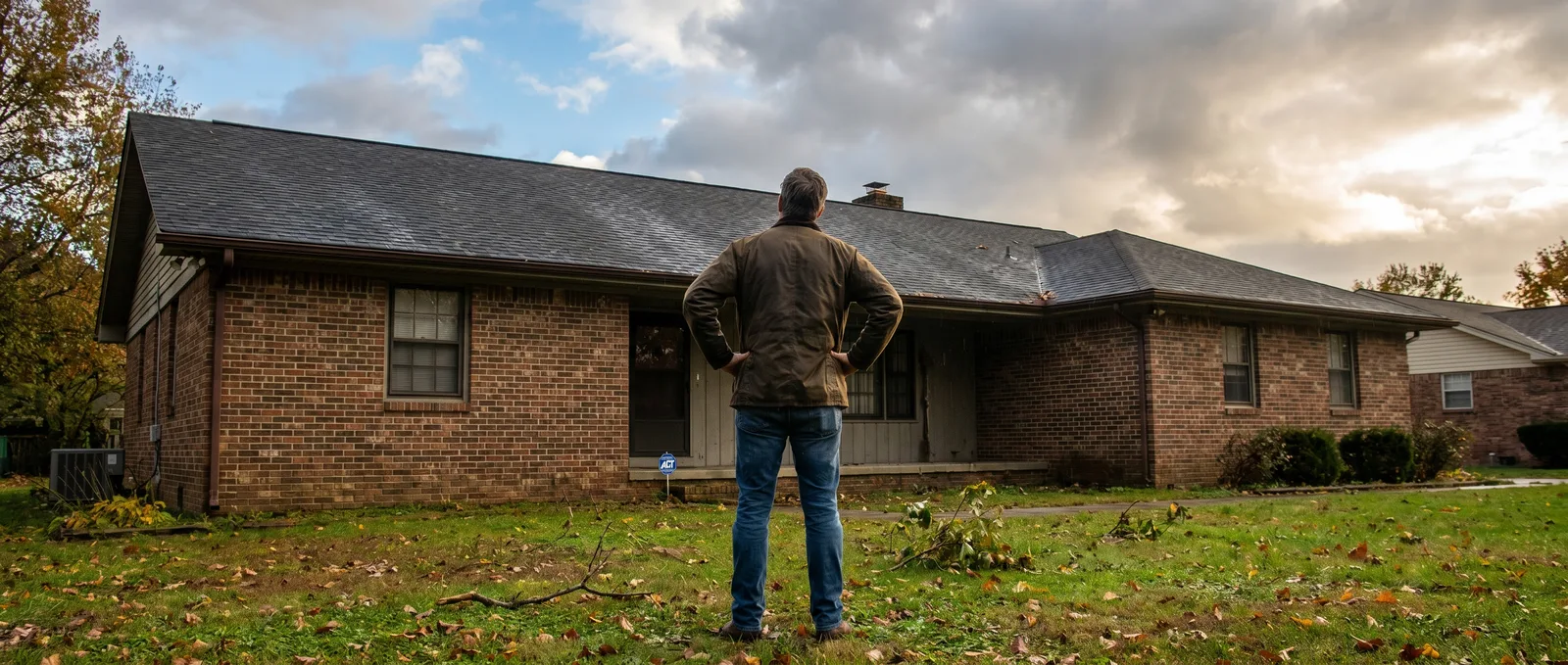
If a hail storm or wind event just rolled through your North Georgia neighborhood and you're staring at your roof wondering "should I even bother filing a claim?". You're asking the right question. Filing isn't free in time and effort, and an unnecessary claim can sometimes complicate things later. But waiting too long, or assuming "the roof looks fine from the ground" can cost you a $15,000 replacement that your insurance would have covered.
This guide walks through the decision the way we'd explain it to a customer standing in their driveway. It's based on hundreds of inspections we've done across Alpharetta, Cumming, Braselton, and the surrounding North Georgia communities, including waves of work after the April 10, 2025 hail event that hit Forsyth, Hall, Gwinnett, and Fulton counties with golf-ball to 3-inch hail.
The short answer: when to file
You should file an insurance claim if any of the following are true:
- A documented storm event passed over your area within the past 12 months (hail, high winds, falling trees)
- You see visible damage on your roof, gutters, AC unit, fences, or other exterior surfaces
- You have new active leaks, water stains on ceilings, or interior moisture you didn't have before the storm
- Neighbors have already started getting roofs replaced through their carriers
You should probably wait or skip filing if:
- Your roof is already past its useful life (25+ years on architectural shingles, 18+ on 3-tab). Wear and tear isn't covered
- The damage is purely cosmetic and your roof is otherwise functional and recent
- You've already filed two or more claims in the past five years (a third can affect your rate)
- The storm event was more than 12 months ago. Most carriers have a one-year filing window in Georgia
The most common reason homeowners miss out on coverage isn't denial. It's not filing. Storm damage is often subtle from the ground. Don't assume "if I can't see it from the driveway, it's fine." Have someone who walks roofs for a living take a look first.
How to tell if your roof actually has damage
Hail and wind damage is often invisible from the ground but obvious on the roof itself. Here's what we look for during an inspection:
Hail damage signs
- Granule loss spots: small dark circular marks on shingles where hail knocked the protective granules off, exposing the asphalt mat underneath
- Bruising: soft spots on the shingle that feel like a bruise on a piece of fruit when you press them
- Cracked or split shingles: hail impact can fracture the shingle mat, leading to leaks within months
- Damaged metal components: dents on roof vents, flashings, gutters, or downspouts (these are the easiest to spot from the ground)
Wind damage signs
- Lifted, creased, or missing shingles: winds above 50 mph can lift shingle tabs and break the seal underneath, even if the shingle stays in place
- Exposed nails where shingles have shifted
- Granule accumulation in gutters: heavy granule loss after a storm is a leading indicator
- Damaged ridge caps or hip caps
Storm-related interior signs
- New water stains on ceilings, particularly near light fixtures, vents, or attic accesses
- Musty smells in the attic that weren't there before
- Sagging drywall, peeling paint near the ceiling, or warped floors directly under the roof
Here's the part most homeowners miss: damage to softer surfaces around the home is the strongest single indicator that your roof has damage too. If a hailstone could dent your AC unit's aluminum fins, dent your gutters, or split your wood fence boards, then it absolutely impacted your asphalt shingles. We've never inspected a roof under a hail-damaged AC unit and found the roof itself untouched. Use the soft surfaces around your home as your "canary in the coal mine."
Before you call your insurance company
Most homeowners call their insurance carrier first and start the claim process. We recommend the opposite order: call a qualified roofer first for a free inspection, then file the claim with the documentation we provide.
Here's why this order matters. When you file a claim, your carrier sends out their own adjuster. Adjusters work for the insurance company. They are generally fair, but their job is to scope the minimum repair that meets the policy. They walk the roof for 20-30 minutes, take some photos, and write up a scope. If they miss damage, that damage doesn't get covered.
When a roofer (especially one who walks roofs every day) inspects first:
- We find damage adjusters often miss, particularly slope-by-slope hail patterns and lifted shingles on the leeward side of high-pitch roofs
- We document with measurements, photos, and storm-event dates so your claim has supporting evidence
- If the adjuster scopes only partial replacement (e.g., one slope), we can advocate for full replacement when matching laws and code requirements call for it
- We can identify decking damage, soft spots, and underlayment issues that won't be visible to a quick adjuster walk-through
A free inspection costs you nothing. Schedule yours here or call (706) 983-5557.
What happens once you file
Here's the typical North Georgia claim timeline based on the dozens we work each year:
- You file the claim with your carrier (online or by phone)
- The carrier assigns an adjuster and schedules an inspection within 7-10 business days
- The adjuster meets you and your roofer at the property to inspect together. We strongly recommend you have your roofer present. This is when scope is decided
- The carrier sends a scope and ACV (actual cash value) check within 1-3 weeks of the inspection
- The work is performed: usually 1-2 days for replacement
- The carrier releases the depreciation after we submit final documentation that the work is complete
From start to finish, expect 3 to 8 weeks. Faster if you have an active leak that requires emergency tarping; slower if there's a back-and-forth on scope.
What if your claim is denied?
Denials happen, but they're often reversible. The most common denial reasons we see:
- "No covered cause of loss": the adjuster didn't believe the damage came from a storm event. Counter this with documented storm dates from NWS records and clear before/after evidence
- "Wear and tear, not storm damage": common on older roofs. We can often demonstrate that specific damage patterns (hail bruising, wind crease marks) can only be caused by recent weather events, not aging
- "Below deductible": the adjuster scoped a small repair instead of a full replacement. Often resolved by getting a second opinion and re-scoping with full damage documentation
- "Outside policy period": the storm date was before your current policy started. Generally not appealable, but worth verifying the storm date is accurate
If you've been denied, don't accept it as final. Bishop JD Roofing handles claim appeals regularly and we work directly with adjusters and carrier supplements teams to get legitimate damage covered.
The bottom line
If a storm passed over your North Georgia home in the past 12 months, get a free roof inspection. It costs nothing, takes 30-45 minutes, and either confirms your roof is fine (peace of mind) or finds damage that's likely covered (a $15,000+ value at no out-of-pocket cost beyond your deductible).
The homeowners who lose out on coverage almost always lose because they waited or assumed the roof was fine without having anyone qualified actually look. Don't be in that group.
Frequently asked questions
Will filing a roof claim raise my insurance rates? +
Filing a single legitimate storm-damage claim is unlikely to raise your premium directly, because storm damage is non-fault. However, multiple claims within a short window (3-5 years) or claims for cosmetic-only damage can affect your rate. Talk to your agent if you're concerned, but don't let rate fears stop you from filing a legitimate claim. The cost of a roof replacement out of pocket far exceeds any plausible rate increase.
How do I know if my roof has hail damage? +
Hail damage can be subtle. Look for round dark spots on shingles where the granules have been knocked loose, dents in metal vents, gutter guards, or downspouts, splatter marks on AC units or fences, and damaged window screens or siding. The clearest sign is often damage to softer surfaces around the home. If your AC unit has hail dents, your roof almost certainly does too. We provide free hail-damage inspections across North Georgia.
What happens if my insurance claim is denied? +
A denial is not the end of the road. You can request a re-inspection, submit additional documentation, hire a public adjuster, or have a roofing contractor (us, for example) advocate on your behalf with photographic evidence. Many initial denials are reversed when proper documentation is presented. We've successfully appealed denied claims for North Georgia homeowners.
How long does the insurance claim process take? +
From filing to roof installation, a typical North Georgia storm-damage claim takes 3 to 8 weeks. The first inspection is usually scheduled within 7-10 days. If approved, the carrier issues a check (usually in two installments, initial ACV payment and a depreciation release after work is completed). If your home is uninhabitable due to roof damage, faster timelines are possible.
Should I get a roofing contractor involved before filing? +
Yes. A qualified contractor can identify damage your adjuster might miss, document it with photos and measurements, and advocate for full replacement when partial replacement is scoped. Bishop JD Roofing offers free inspections and works directly with adjusters across North Georgia. The earlier we're involved, the cleaner the process.